

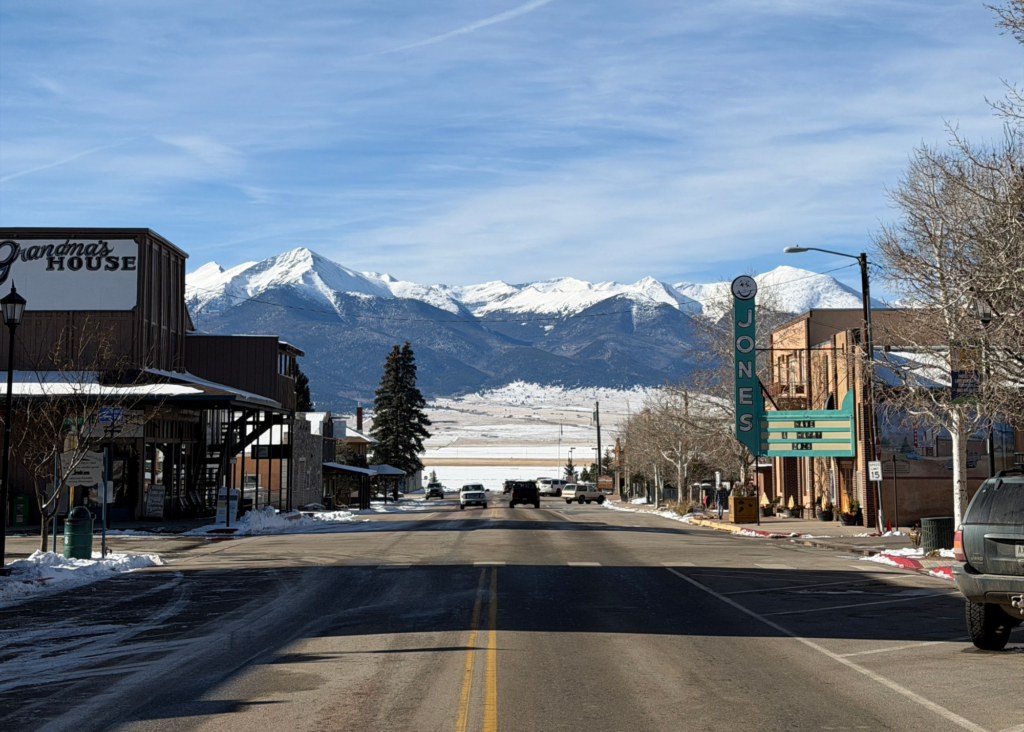
Custer County is home to the Wet Mountain Valley and some of the most stunning mountain landscapes in Colorado. The Wet Mountain Valley is the southernmost and fourth “Park” in Colorado. The spectacular Sangre de Cristo mountain range forms the western boundary of this verdant and historic farming and ranching valley. The Wet or Sierra Mojada mountain range frames the valley to the east.
With the end of the mining boom and loss of rail service in 1938, Custer County’s population declined until 1970 when the paving of SH69 to Westcliffe began to reverse the trend. Beginning in the 1990s, the Silent and then the Baby Boom generation chose this magnificent setting as a place to retire. This retirement boom has more than doubled the population, leading to development in the Valley’s forested interface and increasing its wildfire risk. During the COVID-19 pandemic, thousands of new users visited the area’s world-class outdoor recreational opportunities who began to stress the limits of the fragile trail and off-road infrastructure.
Realizing that the community needed to have a broader public conversation about the relationship to the land and this place, Wet Mountain Valley Outdoors was formed as an umbrella organization to take advantage of the funding offered by Colorado’s Regional Partnership Initiative. Wet Mountain Valley Outdoors then partnered with the Civic Canopy and Smoyer & Associates to lead a Launch Sequence to seek broad public input on a shared vision for the county’s outdoors, build commitment toward that vision, and develop a plan for taking action to make that shared vision a reality.
Over five months, from August 2025 through January 2026, Wet Mountain Valley Outdoors (WMVO) convened a series of four meetings that brought together ranchers, hikers, conservation advocates, long-time locals, and outdoor enthusiasts to define a shared vision for the region’s natural landscapes. Before the first meeting, WMVO gathered input from over 260 people with a short survey that collected responses about how often community members get outdoors, what they value in their favorite outdoor places, the concerns they have about changes in outdoor recreation and the natural environment, and ideas for improvement. Survey findings showed:
- Over 60% get outdoors weekly; 42% go every single day
- Many are long-term residents with deep, generational connections to the land
- Top values are scenic beauty (87%), solitude (66%), proximity to home (60%)
- Favorite activities are hiking, fishing, horseback riding, and wildlife viewing
- Top concerns are trash and litter (61%), crowding (53%), and dog-related issues (41%)
Building the Foundation
At the first meeting, and using information from the survey, community members were invited to dream up newspaper headlines for 2035 of what results from this process could do. Using the Pol.is tool, people input their headlines and voted on which they agreed with. 46 people voted on 44 statements with 1,407 votes cast. The statements with the highest agreement included:
- The Wet Mountain Valley’s scenic beauty, rural character, and dark skies are protected for future generations.
- Custer County balances and protects scenic beauty, heritage, solitude, and outdoor opportunities.
- Custer County sustains recreational opportunities for the community
Shaping the Vision
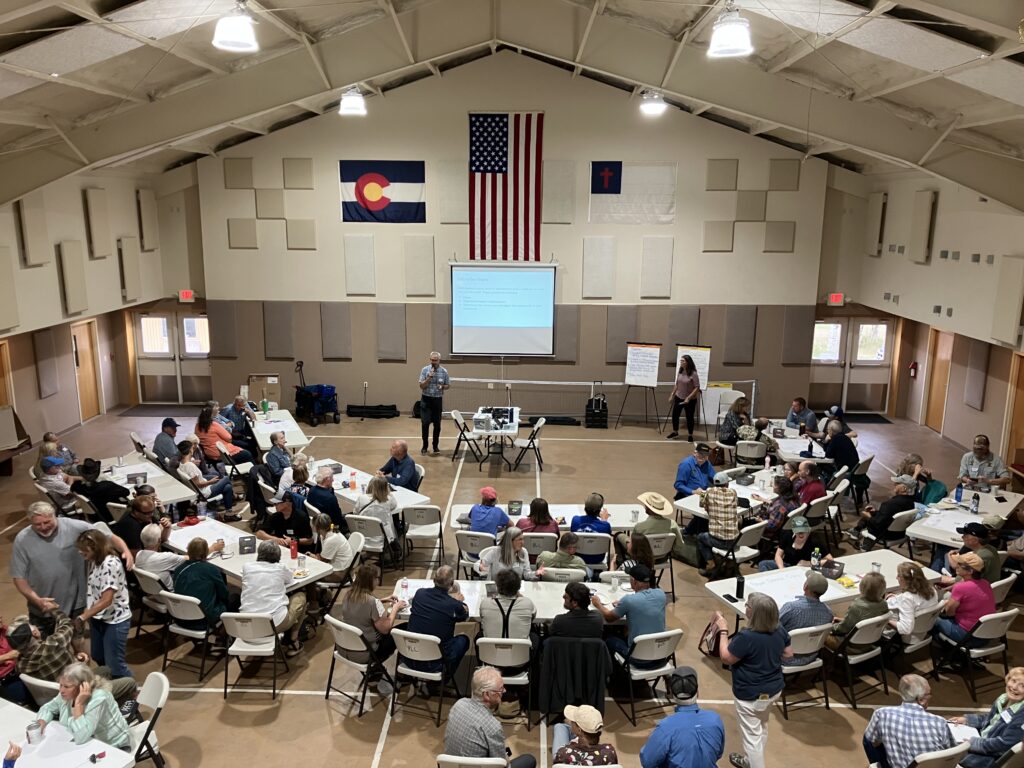
At the second meeting, community members refined the draft vision statements that had emerged from the first meeting and began identifying measurable indicators that would show whether the vision was being achieved.
Facilitators presented three draft statements, each representing a major theme from the first meeting. Community members shared their honest, specific feedback:
- On scenic beauty and agriculture: add “not at the expense of individual freedom”; change “traditional” agricultural lands to “all” — including open-space
- On outdoor recreation and ecosystems: elevate “solitude” to the front; make the language about forests more active; debate about whether “safe” belonged in the statement at all – what is safety?
- On rural heritage and community livelihood: remove “managed growth” (too loaded); define or replace “rural heritage” with words like “community”, “history”, or “lifestyle”; uplift themes of freedom, independence, and ownership
The feedback reflected real differences in values and priorities that the process was designed to surface and honor. A volunteer “Revision Team” was formed to incorporate the feedback and return with a refined draft by the third meeting.
A parallel conversation asked: How will we know if we’re succeeding? Community members began brainstorming indicators — quantifiable data points that could track progress toward the vision. A volunteer “Data Team” was established to develop this framework further.
Turning the Curve
At the third meeting, a revised vision statement was unveiled by the volunteer Revision Team:
“Our vision for the Custer County community is to ensure that the land and community we love are enjoyed for generations to come, including: our scenic beauty, agricultural lands, and waters; our forests, wildlife and outdoor recreation; and our rural heritage and community livelihood.”
This wasn’t just a vision statement — it was a blueprint. The three themes in the vision became the three Action Teams that would drive WMVO’s project work.
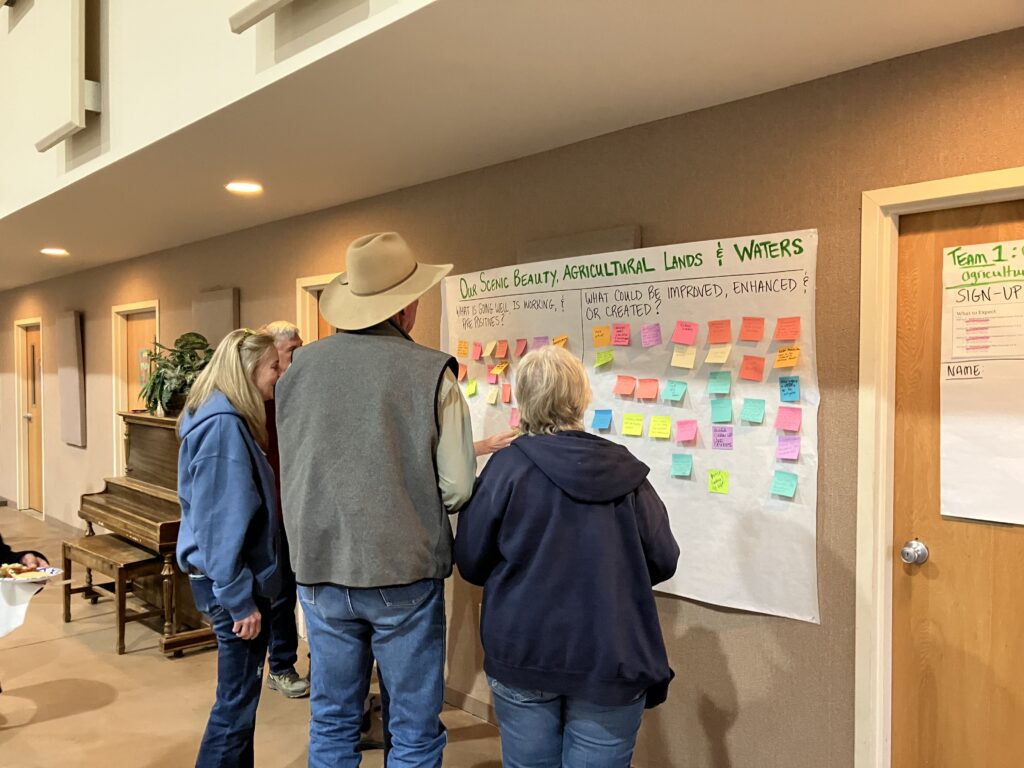
Facilitators then led an activity where community members walked around the room to large murals, one for each Action Team, posting sticky notes about what was already working and what needed improvement.
On scenic beauty, agricultural lands, and waters, community members celebrated the solitude of trails and the stewardship of private landowners while raising urgent concerns about algae blooms on Lake DeWeese, noxious weeds, and the health of riparian areas on grazed lands. Ideas ranged from nitrogen and phosphorus monitoring to watershed education campaigns.
On forests, wildlife and outdoor recreation, community members praised the Rainbow Trail, the diversity of outdoor opportunities, and strong Search and Rescue operations. Improvement ideas were equally wide-ranging: better wildfire mitigation, accessibility upgrades for wheelchair users and adaptive mountain bikers, winter recreation infrastructure like ice rinks and cross-country ski trails, and improved forest road maintenance for emergency access.
On rural heritage and community livelihood, the community expressed deep pride in institutions like the Beckwith Ranch and All Aboard Westcliffe while identifying a critical gap: the need to pass this heritage to younger generations. Ideas included ranch immersion experiences for youth, an agricultural marketplace, upgraded community parks, and a new community center.
Community members were then invited to sign up for the three Action Teams, which would meet three times over the following months to do the deep project-development work.
The Plan of Action
When community members gathered for the fourth and final meeting, Action Teams had already met multiple times, developed 41 potential projects, and ran a community-wide prioritization survey that drew 151 respondents.
The prioritization survey revealed clear focus areas: water stewardship, wildfire mitigation, ecosystem health and wildlife conservation, and agriculture and ranching support. These weren’t surprising themes — they had been present since the first meeting — but now they were backed by data, detailed project plans, and a community ready to act.
WMVO announced it had been awarded $75,000 in RPI funds to move projects forward in 2026–27 — a significant early milestone. WMVO also presented a funding strategy framework with a 6-12-18 month roadmap to help match projects with the grants and partnerships most likely to support them.
What This Process Teaches Us
The WMVO Community Network process is a compelling case study in how communities can move from diffuse aspirations to concrete action. A few lessons stand out:
- Start with listening. The survey data gathered before the first meeting gave the process a factual foundation and signaled to community members that their views mattered from day one.
- Let the vision emerge from the community. Rather than arriving with predetermined outcomes, WMVO created conditions for shared meaning to develop organically across multiple community meetings.
- Distribute ownership. Volunteer teams — the Revision Team, the Data Team, and the Action Teams — gave community members a direct role in shaping the process and priorities.
- Connect effort to resources. By tying the community planning process to funding opportunities like CPW’s RPI funds, WMVO gave community members a tangible reason to invest their time.
- Keep showing up. Four meetings over five months is a real ask of a community. Make sure that the process is clear about why each step is necessary.
In Custer County, the mountains have always been there. What’s new is a community that is more organized to protect them — together, deliberately, and with real resources behind the effort.