

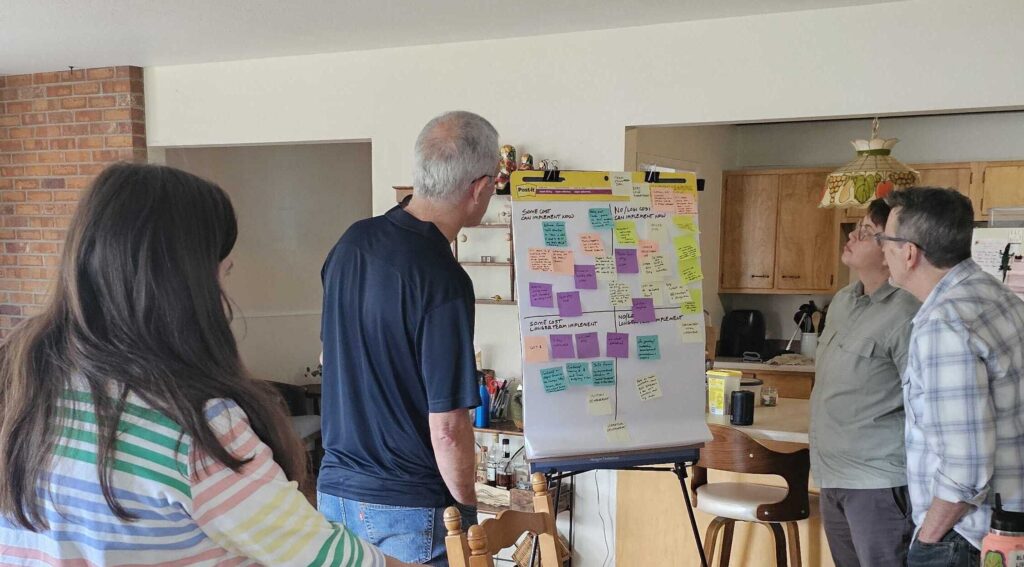
At the Canopy we believe that the way decisions are made matters as much as the decisions themselves. Those most impacted by decisions should be meaningfully involved in making them. While we consistently share these core beliefs with our partners in the last few years we’ve walked the talk and applied this belief to our own internal financial decision-making structure with some interesting results.
Moving to Budget Transparency
Three years ago the Canopy team read Frederick Laloux’s Reinventing Organizations. The book deftly outlines how organizations can move beyond traditional hierarchical structures and take a radical leap toward decentralized decision-making, self-management, and a deeper sense of purpose. We didn’t know at the time just how much this book would change the organizational structure at The Civic Canopy.
Decentralizing decision-making structures and promoting an individual leadership model is not an overnight process. One of the first routine practices we implemented was ensuring full team understanding of our overall financial situation, through the practice of reviewing Canopy’s Profit & Loss reports as well as Budget to Actuals numbers each month fully and transparently together and asking each other lots of questions along the way. Of course, early on there were varying degrees of comfort from staffers around being this close to Canopy’s financial picture, but it was not because of worries around closed door finance meetings or imaginary hidden agendas, rather because each person understood exactly what was needed to maintain overall financial health and keep Canopy operating. Monthly revenue and expense targets to keep us afloat were clear. The team documented expenses, including personnel costs (salaries, health insurance, etc.) and team members offered cost-cutting and revenue generating ideas.
But isn’t it hard or scary to make organizational level decisions without having a top down hierarchy in place? The answer is sometimes yes, but it can work!
A Collaborative Approach to Budget Building & Oversight
It was at this point where we dipped back again into our Reinventing Organizations learnings. The full team used our Collaborative Budget Builder to develop the next fiscal year’s budget. The Collaborative Budget Builder helps to collect input from each impacted member about their priorities, averaging these scores to provide a draft budget back to the full group. Each team member was designated with the responsibility for developing, tracking and managing line items in the budget. These weren’t ‘random’ designations, rather people whose role and responsibilities most aligned with a particular budget item became the stewards of that budget component. The communications lead was in charge of our marketing budget. The donor relations lead was in charge of our fundraising budget. The office manager was in charge of our IT budget, etc.
Not only was each accountable line item in the budget assigned a chief steward, or directly accountable person, anyone else who’s work might be most impacted by a particular decision around that budget line item was designated as a consulting partner. Requests for spending were brought forth to the accountable person, who in turn could consult with those who might be impacted by the decision, or they could make the decision on their own by reviewing the current budget to actual spending and forecasting what future needs still may be in play. The end result was a decentralized decision-making structure with full team ownership of the overall budget. Each individual staffer now carried a deeper sense of self-management, budget stewardship, and an aligned purpose during both the budget development stage as well as ongoing budget oversight. In this model, the process became as important as output.
Some Surprises Along the Way
Getting fully transparent about finances didn’t lead to disagreement about who got what when it came to line items each person was responsible for. Rather, it made our team, across the board, much more willing to judiciously monitor their own areas of the budget and demonstrate initiative in finding ways to better manage costs and efficiencies. Once folks were connected to the bigger picture, they were much less likely to get frustrated by the times we had to say no to the things we wanted. That’s because they could clearly see the ‘why’ behind the often-difficult decisions that budget managers must make to create and keep a balanced budget. Though we were convinced this model would work for us, we were nevertheless a bit surprised that our team got so versed and vested in budget oversight that we’ve begun to encourage our team to spend a little more!
We have operated this way for the past three annual budget cycles, and for us it works. Much as with our external work in community, Canopy’s internal systems and processes are designed to elevate each voice on the team, where we each contribute, benefit and thrive, and our budgeting process is no different. In the end, our budgeting process has reinforced what we believe to be true in organizations and communities alike: the most sustainable decisions are those made with people, not for them.